The Wedding at Cana
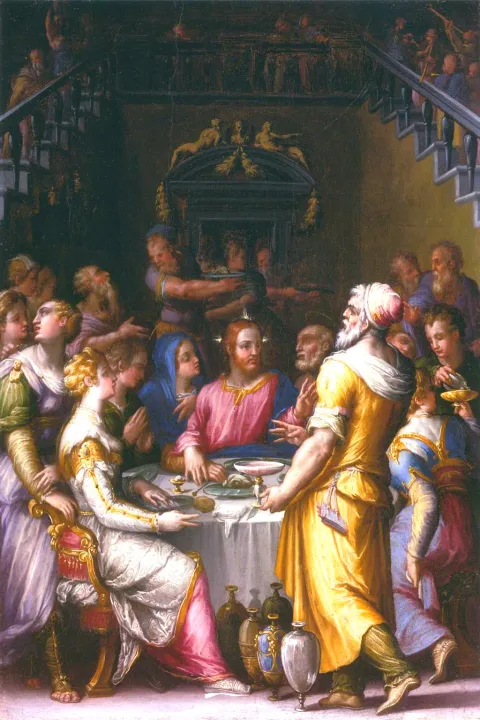
The Wedding at Cana is the second Luminous Mystery of the Rosary. When the wine runs out, Mary brings the need to Jesus and tells the servants to do what he says. He changes water into wine, revealing his glory.
On this page
Scripture
John 2:1-5
The third day, there was a wedding in Cana of Galilee. Jesus’ mother was there. Jesus also was invited, with his disciples, to the wedding. When the wine ran out, Jesus’ mother said to him, “They have no wine.” Jesus said to her, “Woman, what does that have to do with you and me? My hour has not yet come.” His mother said to the servants, “Whatever he says to you, do it.”
Spiritual fruit: to Jesus through Mary
Mary notices a need
Jesus, his mother, and his disciples attend a wedding at Cana. When the wine runs out, Mary brings the need to her Son. She then directs the servants to follow his word. Jesus tells them to fill the stone jars with water, and the water becomes wine.
John 2:1–11 describes the servants filling the jars at Jesus' direction and taking what they draw to the steward. John calls this the first of Jesus' signs: it reveals his glory, and his disciples believe in him.
To Jesus through Mary
The fruit commonly associated with this decade is trust in Mary's intercession. Her care directs us toward Christ. She notices the lack, speaks to him, and asks the servants to listen to him. We can bring her the needs of our household and ask her prayers, confident that her love remains wholly united to her Son.
Many people offer this mystery for married couples. Couples preparing for marriage, and those who have been married for many years, each have concerns to bring before God. This decade can include prayer for a particular marriage, especially where illness or a strained relationship has made life together difficult.
Listening and responding
John notes that the steward did not know where the wine came from, while the servants who drew the water knew. Their part in this sign can guide a prayer of thanksgiving for people whose practical service supports a household or community.